Looking For EV Compliance? 5 Things Property Managers Should Know About the 2026 Building Code
As of January 1, 2026, updated CALGreen and Title 24 rules require most new California developments to install EV charging hardware, not just plan for it. If you’re planning new construction or a permitted renovation, you’ll want the requirements in hand early so you can avoid redesigns and change orders later.
1. The One-to-One Mandate for Multifamily Housing
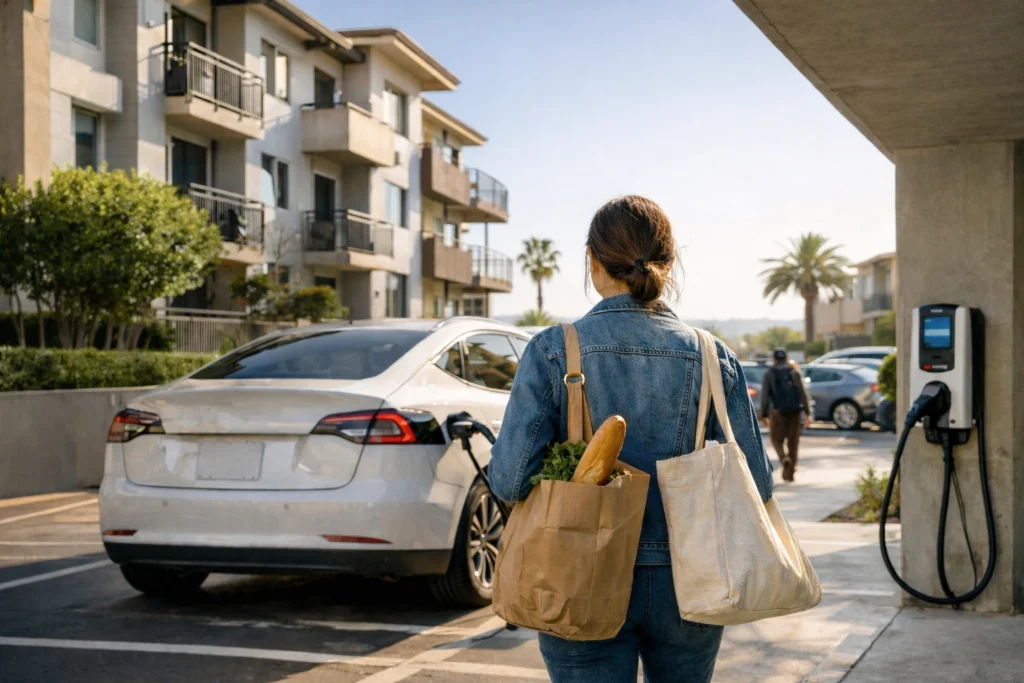
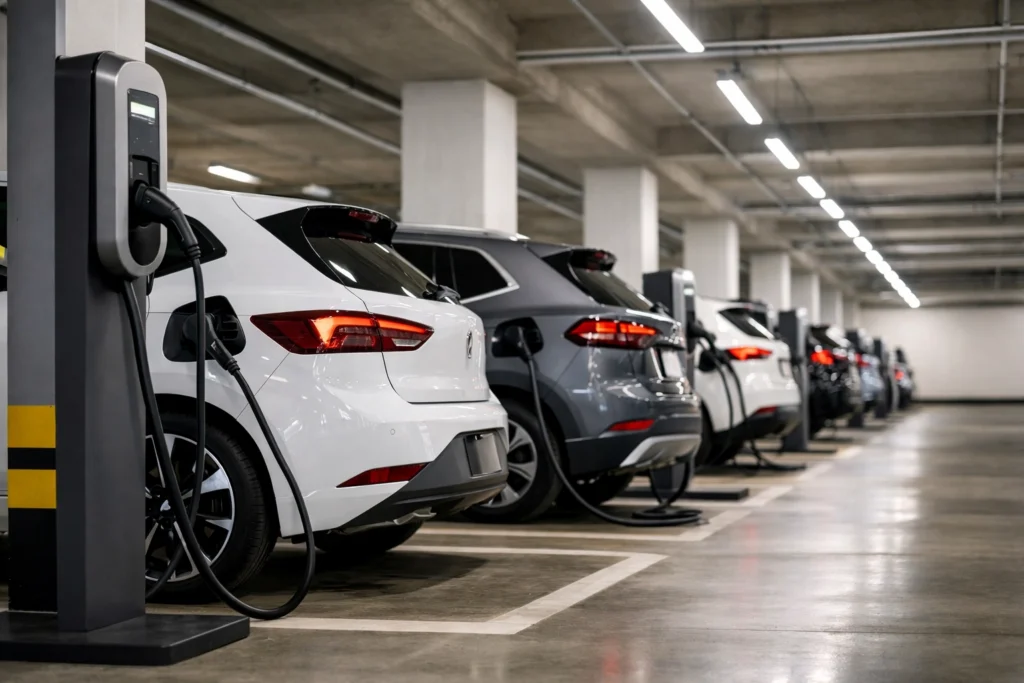
The most significant shift in the 2026 code involves residential parking. For new multifamily developments, the state now requires at least one low-power Level 2 EV charging receptacle for every single dwelling unit. This is a massive jump from previous years, where only a small percentage of spaces needed equipment.
If your property has assigned parking, the charger must be located at that specific assigned space. This creates a logistical puzzle for any property manager trying to map out electrical runs across a large garage. For properties with unassigned or common-use parking, the requirement is at least one receptacle per dwelling unit, plus 25% of extra common spaces must have Level 2 chargers installed and accessible to all residents.
This requirement ensures that every resident has the ability to charge a vehicle at home. It removes the “first-come, first-served” tension that often happens with a limited number of shared chargers. However, it also means your initial construction costs for electrical infrastructure will increase significantly.
2. Technical Standards for Chargers and Load Management Systems
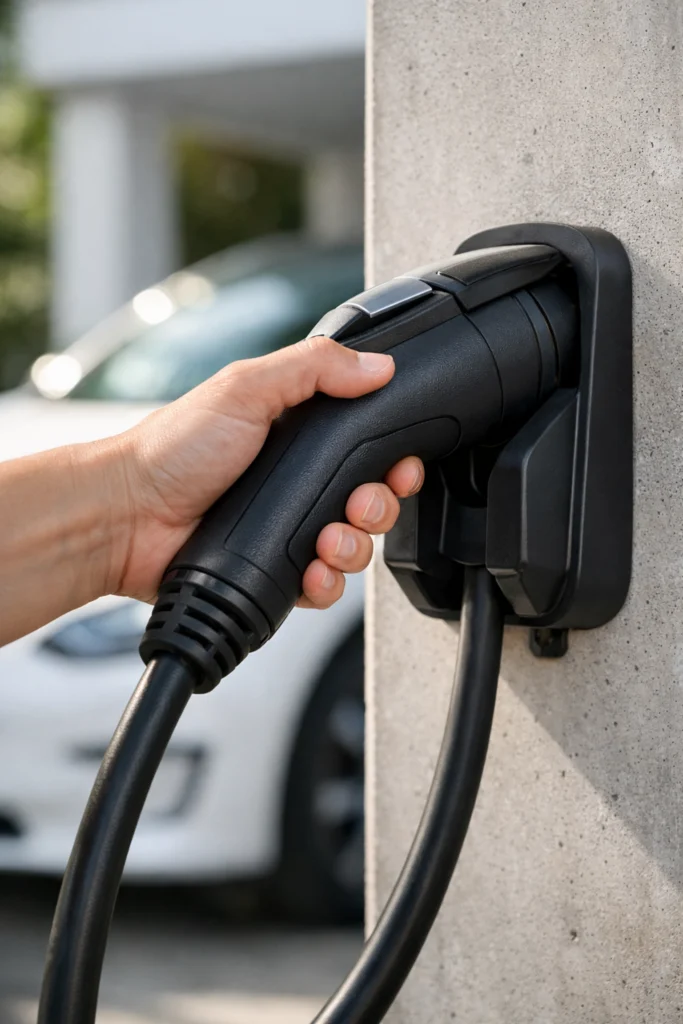
The code does not just say you need “a charger,” it specifies exactly what that hardware must look like. Every charger must provide a minimum of 240V/20A service to meet the low-power Level 2 requirement, ensuring residents get a meaningful charge overnight rather than a slow trickle that barely adds any range.
You also have to navigate the ongoing “connector war” between different vehicle brands. The 2026 code requires chargers to use either J1772 or J3400 connectors. The J3400 is the North American Charging Standard, often associated with Tesla, which has now been adopted by most major automakers. Ensuring your property management team selects hardware that supports both standards, or provides adapters, is crucial; installing outdated plugs might meet the legal letter of the code but fail to provide a useful multifamily amenity. You can learn more about the basics of these systems on our EVs 101 page.
Meeting these standards across every parking space doesn’t mean every space needs its own dedicated electrical circuit. The state allows for Automatic Load Management Systems (ALMS), which let multiple charging stations share a single circuit by intelligently distributing power based on real-time demand. As long as the system can provide at least 3.3 kilowatts simultaneously to each unit when needed, you comply. Using load management means you might not need a massive service upgrade from the utility company, letting you maximize your existing electrical capacity while still meeting the state mandate. This combination, meeting the hardware standard while managing load intelligently, is often where the real budget savings happen.
3. Non-Residential and Hospitality Requirements Are Rising
If you manage a mixed-use building or a hotel, the rules are even more aggressive. Hotels and motels must now meet a combined 65% EV coverage across their parking spaces. Specifically, 40% of all spaces must be equipped with low-power Level 2 charging receptacles, and an additional 25% of spaces must have fully installed Level 2 EV chargers. Local cities have the power to push requirements even higher.
For general commercial buildings like offices and retail centers, EV charging requirements have also increased significantly. Percentage requirements vary depending on the number of parking spaces and occupancy type, so it’s important to review the applicable code table for your specific project rather than relying on a single blanket figure. Many jurisdictions are already signaling they will require even higher levels to meet local climate goals. This is no longer a niche feature for high-end boutiques. It is a standard expectation for any commercial property manager.
These requirements apply to both new construction and major alterations. If you are adding parking spaces or performing a renovation that requires a building permit, you likely trigger these new compliance obligations. Always check with your local planning department before finalizing your renovation budget.
4. The June 2026 Tax Credit Deadline
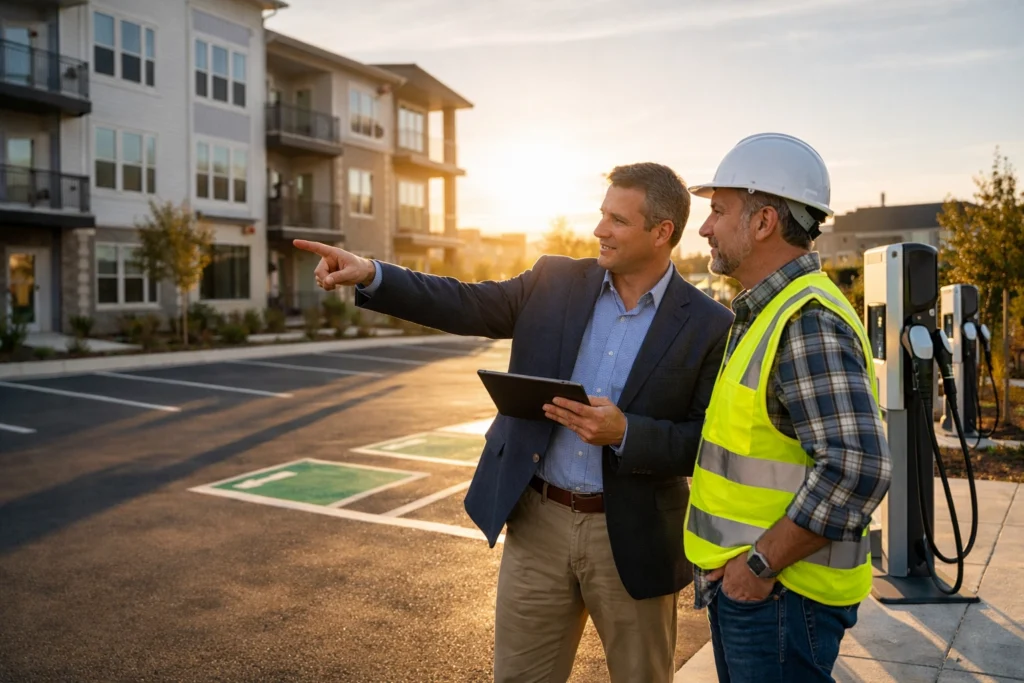
Timing is everything when it comes to the financial side of EV compliance. The IRS 30C alternative fuel vehicle refueling property credit is a potential helper for qualifying property owners. This federal credit can cover a significant portion of the hardware and installation costs for charging stations.
However, this credit is currently set to expire on June 30, 2026, after being accelerated from its original 2032 deadline by the One Big Beautiful Bill Act signed in July 2025. That creates a narrow window if your project is on track for early 2026 completion.
There is an important eligibility restriction: the 30C credit only applies to installations in qualifying locations, specifically low-income communities or non-urban areas as defined by IRS census tracts. Properties in dense metro areas may not qualify at all. Before factoring this credit into your project budget, verify your property’s census tract eligibility using the IRS lookup tool or consult a tax professional.
For properties that do qualify, getting permits and installations finalized before June 30, 2026, could be the difference between a project that pays for itself and one that stays in the red.
5. How Alterations Trigger New Rules
It is a common mistake to think these rules only apply to brand-new buildings. In reality, the 2026 code covers any parking space that is added or altered in a way that requires a building permit. If you are resurfacing a lot and adding new lighting or stalls, you may be required to bring the entire lot up to the new EV standards.
This “trigger” mechanism means that older properties will gradually catch up to the new standards. It prevents a gap where only new luxury builds have charging, while older “B” and “C” class properties fall behind. As a property manager, you should audit your current parking facilities now to see how a future renovation might impact your bottom line.
Maintaining these systems is another layer of responsibility. Once the chargers are in, they must remain functional. Poorly maintained chargers are a frequent complaint in the property management world. Choosing a partner who handles the long-term maintenance is often better than trying to manage it in-house.
Turning Compliance Into a Multifamily Amenity
While these codes feel like a burden, they actually provide a way to differentiate your property. A building that is fully compliant with the 2026 code is much more attractive to the growing number of EV drivers. You are not just following the law; you are providing a high-value multifamily amenity.
The challenge is the “turnkey” aspect. Installing the wires is one thing, but managing the billing, the maintenance, and the user experience is another. Residents expect a seamless experience where they can plug in and see their charging status on an app.
This is where a managed service can help. Instead of the property manager becoming an amateur electrician and software developer, you can outsource the entire ecosystem. This keeps your focus on the residents while ensuring the building stays compliant with state law.
Why Envoy Handles the Headache
The 2026 building code is detailed, but it doesn’t have to become your full-time side project. Envoy helps properties interpret the requirements and plan a setup that works in the real world, from equipment selection (240V/20A, connector standards) to load management and long-term operability.
We handle the charging infrastructure and provide the electric vehicles your residents can share, with cleaning, maintenance, analytics, and support included, and insurance coverage arranged through our third-party partners. That means you’re not stuck troubleshooting technical specs, vendor coordination, or charger uptime on top of everything else you already manage.
If you’re mapping out 2026 compliance and want a second set of eyes, we’re happy to be a resource. When the time is right, we can also help you turn the mandate into a managed amenity that supports ancillary revenue and improves retention for residents who drive EVs. Connect with us through our contact page.
Summary
The 2026 California Building Standards Code raises the bar on EV charging, especially the one-to-one multifamily requirement and tighter technical standards. The federal 30C tax credit deadline adds urgency for qualifying properties, though eligibility is limited to census tracts in low-income or non-urban areas. Plan early, verify your eligibility, and you can stay compliant, protect your budget, and keep EV-driving residents longer.
ABOUT ENVOY
Envoy helps multifamily, hospitality, and workplace properties offer EV charging and car sharing as a seamless, resident-ready amenity. For apartment communities, Envoy manages the charging infrastructure, from equipment selection and code compliance to load management and long-term maintenance, and can pair it with a shared electric vehicle fleet that residents book directly through an app. We handle the technical and day-to-day operations, including cleaning, maintenance, analytics, and support, with insurance arranged through third-party providers, so property managers can offer a compliant, functional amenity without adding staff or in-house expertise. Learn more at envoythere.com.
FREQUENTLY ASKED QUESTIONS
Does the 2026 code apply to existing buildings?
Yes. While the code targets new construction, it also applies to major alterations, meaning any parking space that’s added or altered in a way that requires a building permit. If you’re resurfacing a lot, adding stalls, or updating lighting as part of a permitted renovation, you may be required to bring the entire lot up to the new EV standards, not just the areas you’re actively changing.
What connector type does California require in 2026?
The 2026 code requires chargers to use either J1772 or J3400 connectors. J3400 is the North American Charging Standard, originally associated with Tesla and now adopted by most major automakers, so choosing hardware that supports both standards (or includes adapters) helps keep the chargers useful across vehicle brands.
Who qualifies for the 30C tax credit?
The IRS 30C credit is limited to installations in qualifying census tracts, specifically low-income communities or non-urban areas as defined by the IRS. Properties in dense metro areas may not qualify at all, so it’s worth verifying your property’s census tract eligibility using the IRS lookup tool, or consulting a tax professional, before counting on the credit in your budget. For properties that do qualify, permits and installation need to be finalized before the credit’s June 30, 2026 deadline.
Do hotels have different EV requirements than apartments?
Yes. Multifamily housing must provide at least one low-power Level 2 charging receptacle per dwelling unit, plus additional coverage for common parking. Hotels and motels follow a different formula: a combined 65% EV coverage across parking spaces, made up of 40% of spaces with low-power Level 2 receptacles and an additional 25% with fully installed Level 2 chargers. Local jurisdictions can push these percentages even higher.