How Car Sharing Pays for Itself in Your 2027 Budget
A car sharing service belongs in your 2027 budget conversation for more than resident appeal, though it starts with resident appeal too. Evaluated correctly, it can meaningfully reduce residents’ cost of living while also protecting a property’s net operating income, or NOI, through improved retention.
That makes car sharing more than a “nice to have” amenity. It becomes a financial line item you can test, model, and review alongside other property investments.
Why NOI matters more than a nice amenity
NOI is the income a property generates from normal operations after operating expenses.
The basic formula is:
NOI = Effective gross income − operating expenses
Effective gross income can include rent, parking fees, storage income, and other recurring property revenue. Operating expenses can include maintenance, insurance, utilities, payroll, management fees, and property taxes. Debt service, income taxes, and major capital expenditures are generally evaluated separately from NOI. J.P. Morgan’s NOI overview provides a helpful breakdown.
Why does ownership focus on NOI?
Because a stronger NOI can improve a property’s operating performance, and depending on the market and applicable cap rate, contribute to higher asset value. A property improvement that creates resident excitement but adds ongoing costs without protecting income or reducing expenses can weaken the budget.
That’s the test every amenity should face:
- Does it help protect occupancy or rental income?
- Does it reduce a recurring operating burden?
- Does it create ancillary income?
- Does it avoid or delay a larger capital requirement?
- Can the property measure the result?
Car sharing may touch several of these categories. The opportunity is real, but the numbers need to come from your property’s own rent roll, turnover history, and operating budget.
How car sharing affects residents’ cost of living
Owning a car is expensive in ways that go well beyond the monthly payment: insurance, maintenance, fuel or charging, and often a dedicated parking fee on top of rent. For a resident who doesn’t need a car every day, that’s a lot of fixed cost sitting mostly idle.
An on-site shared fleet gives residents another option. Instead of carrying all of those costs to guarantee occasional access to a vehicle, residents can book one, by the hour or the day, only when they actually need it. For someone who drives a few times a week rather than daily, that can add up to a meaningfully lower cost of living, without giving up reliable access to a car when it matters: a grocery run, an airport trip, a weekend outside the city.
That’s a real value proposition on its own, and it’s also the mechanism behind the financial case for the property, covered next.
How resident retention protects NOI
A resident who values convenient, affordable access to a car has one more reason to renew.
That doesn’t mean every resident will stay because of car sharing. It means the service can strengthen the overall value proposition for residents who want vehicle access without the cost of owning one. Retention affects NOI in two ways: a renewal helps avoid lost rent during a vacancy period, and it reduces turnover-related expenses such as make-ready work, cleaning, marketing, and leasing labor. When a resident stays, the property avoids several costs associated with preparing and filling a unit again.
To evaluate the retention angle, pull your own property data:
- Review your average monthly rent.
- Calculate the average number of vacant days between leases.
- Add typical make-ready, cleaning, marketing, and leasing costs.
- Estimate how many additional renewals the amenity would need to support to cover its annual cost.
- Compare that threshold with resident survey feedback, leasing team observations, and amenity usage after launch.
Do not treat retention as guaranteed revenue. Treat it as a measurable operating hypothesis. Track renewal rates among residents who use the service, compare usage with lease outcomes, and review the results over time.
Envoy supports this analysis with usage analytics while handling vehicle maintenance, cleaning, insurance, charging, and customer support. You can learn how Envoy’s electric car-sharing service works before building the line item into your operating plan.
A simple multifamily amenity ROI and NOI example
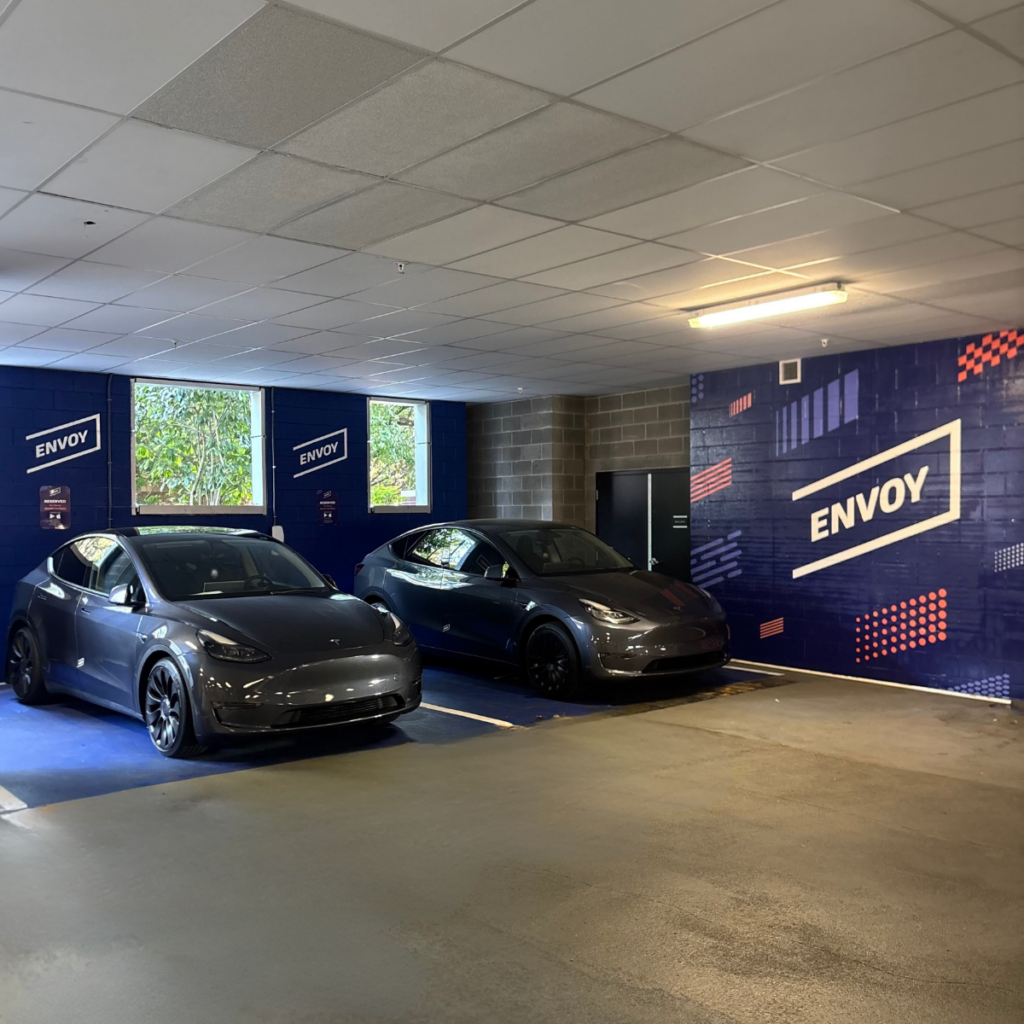
Here’s an illustrative model for a 200-unit property with two Envoy vehicles on-site, built around the retention benefit, since that’s the piece with a defensible, modelable dollar value. Using a realistic, unremarkable adoption level, about 10% of units renewing partly because of the amenity, isn’t a stretch scenario; amenities regularly show up as a top-3 renewal factor in resident surveys at rates like this. The program cost reflects Envoy’s actual starting rate; the turnover figure is grounded in published industry research, cited below, but should still be replaced with your own property’s numbers before finalizing a budget request.
Assumptions
- Annual car-sharing program cost: $36,000, based on two vehicles at Envoy’s starting rate of $1,500 per vehicle per month (premium vehicle types may run higher)
- Average monthly rent: $2,400 (illustrative — use your property’s actual average)
- Avoided vacancy from one additional renewal: one month, or $2,400
- Average turnover and make-ready cost: $1,200
- Total value of one avoided turnover: $3,600, consistent with the $3,872–$4,000 average per-turnover cost reported by the National Apartment Association and Zego’s 2023 Resident Experience Management Report
- Renewals influenced by the amenity: 20, roughly 10% of units at a 200-unit property (an illustrative modeling assumption — track your own renewal outcomes among residents who use the service)
Step 1: Calculate the retention benefit
Twenty renewals multiplied by the estimated $3,600 value of each avoided turnover equals:
20 × $3,600 = $72,000
Step 2: Compare the benefit with the annual cost
$72,000 retention benefit
− $36,000 annual program cost
= $36,000 estimated annual NOI improvement
This is the number worth building a budget around. Under these assumptions, the car-sharing program not only covers its modeled annual cost, it roughly doubles it in estimated NOI improvement, on top of the resident value described above, a genuine reduction in cost of living that helps a property stand out in a competitive leasing market. Few amenities can make that combined case.
If the property uses a 5% cap rate for a separate valuation exercise, a $36,000 annual NOI increase would imply approximately $720,000 in value. That calculation is also illustrative. Ownership should use its approved cap rate, underwriting standards, and finance team guidance.
What this looks like at different adoption levels
The realistic case above isn’t the only way to look at it. The same per-unit figures scale directly with adoption, so it’s worth seeing the range rather than anchoring on one number:
| Scenario | Renewals influenced | Net annual NOI impact |
|---|---|---|
| Conservative (floor case) | 10 (5% of units) | $0 |
| Realistic | 20 (10% of units) | $36,000 |
| Strong adoption | 30 (15% of units) | $72,000 |
Read the floor case as a safety net, not a sales pitch. It says that even if adoption comes in at half the realistic level, the property doesn’t lose money, which matters when you’re asking ownership to approve something new. But it’s not the reason to add this to the budget. The realistic case is: a genuine, positive NOI improvement from retention alone, paired with a resident benefit that’s harder to put a number on but real all the same. That combination is what makes this different from a typical amenity spend.

How to build car sharing into the 2027 budget
Start with a property-specific worksheet instead of a generic amenity estimate.
Gather the income inputs
Review:
- Average monthly rent
- Current occupancy and renewal rates
- Average vacancy days
- Turnover and make-ready costs
- Resident demand for occasional vehicle access
Gather the cost inputs
Review:
- Current program pricing from Envoy
- EV charging installation needs, if any
- Any required property contribution or operating cost
Set measurable targets
Define what success looks like before launch. Your targets might include resident registrations, completed trips, utilization by month, renewal outcomes among users, or resident satisfaction.
Then establish a review period. A 90-day check can reveal early usage patterns, while a full 12-month review gives you better data for renewal and annual budget decisions. Delays can happen if leasing data is incomplete or resident adoption starts slowly.
Before publication or approval, verify every real figure. Confirm current program pricing with Envoy, retention assumptions with your property management team, and valuation assumptions with ownership or finance. The example above is designed to explain the math, not to promise a specific result.
Make car sharing a budget line, not a wishlist item
The strongest case for car sharing connects resident experience to property performance.
Residents get a meaningfully lower cost of living, without giving up reliable access to a vehicle. Property teams get a useful amenity without managing a private fleet. Ownership gets a framework for evaluating retention and NOI together, backed by real numbers instead of adjectives.
That is the conversation to take into 2027. Don’t ask only whether residents will like the service. Ask what the service needs to accomplish financially, which assumptions can be verified, and how the property will measure the outcome.
Talk to Envoy about what car sharing could do for your property’s NOI, or contact the Envoy team to start building a property-specific model.
Frequently asked questions
How does EV car sharing affect a multifamily property’s NOI?
Primarily through resident retention. Residents who value convenient, affordable access to a vehicle without owning one have one more reason to renew, which protects rental income and reduces turnover costs. The impact depends on program cost and renewal outcomes, and should be modeled with your own property’s numbers.
How does car sharing affect residents’ cost of living?
It removes the fixed costs of car ownership, the payment, insurance, maintenance, and fuel or charging, for residents who don’t need a car every day, while still giving them reliable access to one when they do. That can add up to meaningful monthly savings for the residents who use it.
Is car sharing a capex or opex expense?
With a fully managed provider like Envoy, it’s an operating expense. Envoy owns, insures, and maintains the vehicles, so properties avoid the capital expenditure of purchasing and maintaining a fleet themselves.
How much does an on-site car-sharing program cost?
Envoy’s pricing starts around $1,500 per vehicle per month; premium vehicle types can cost more.
When should a property budget for a car-sharing amenity?
Ideally during the annual budget planning cycle, typically late summer through fall for multifamily properties in the U.S., before the following year’s operating budget is finalized.